
customize your solutions request a quote right now!
Material Application: Lithium Battery Packaging
Product: 1060, 1070 and 1235 aluminum foil
Project Details:
Aluminum Foil for Lithium Battery Packaging acts as the sole oxygen and moisture barrier in soft-pack lithium batteries. Choosing the wrong foil leads to lower sealing yields, battery swelling, or even safety failures. Based on actual supply experience, here are the critical parameters and common pitfalls for different application scenarios.
Different batteries demand distinctly different foil thicknesses:
- Consumer electronics (phones, earbuds): 20–25μm – high energy density priority, extremely low pinhole tolerance.
- EV batteries (electric vehicles): 30–40μm – requires mechanical strength and long-term vibration resistance.
- Energy storage batteries: 25–35μm – consistency and cost balance are key.
> Note: Using 35μm EV-grade foil for consumer batteries reduces energy density; conversely, thin consumer-grade foil in EV applications tends to develop micro-cracks under vibration.
The foil must be made from 1060, 1070, or 1235 aluminum alloy (purity ≥99.6%), and the temper must be O‑temper (soft). H‑temper (hard) typically has elongation below 5% and will crack during forming.
Recommended mechanical ranges:
- Tensile strength ≥ 50 MPa
- Elongation ≥ 15% (preferably ≥18%)
Common mistake: Over‑pursuing high tensile strength. In reality, every 5–8 MPa increase in strength may reduce elongation by 3–5 percentage points, raising the risk of forming cracks.
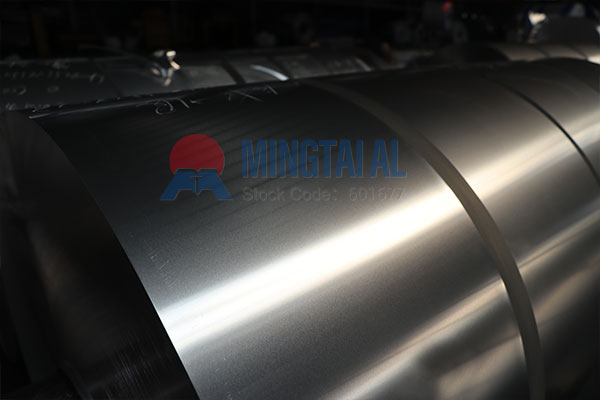
Pinholes are the most difficult defect to eliminate during foil production. Acceptable standards for lithium battery packaging:
- No more than 3 pinholes per square meter
- Individual pinhole diameter ≤ 20μm (anything larger is rejectable)
A single pinhole allows moisture to permeate at several milligrams per day, causing obvious battery swelling within three months. Reputable suppliers use online pinhole detectors or light tables to inspect every roll. If you can see light spots with the naked eye under strong light, reject the roll immediately.
The surface condition of the base foil directly affects customers’ process yields:
- Wetting tension (dyne level): Requires ≥32 dyne/cm. Below this, adhesives cannot spread uniformly, leading to delamination after lamination.
- Residual oil: Controlled at ≤8 mg/m². Excess oil contaminates the electrolyte. Spot checks can be done with a rapid oil analyzer.
- Flatness: No edge waves, warps, or severe stripes; otherwise, frequent web breaks occur on high-speed packaging lines.
- Mistake 1: Comparing only price, not pinhole rate. Low prices often come from Grade‑B rolls with uncontrolled pinholes, causing 10–20% lower production yield.
- Mistake 2: Believing all O‑temper foils are the same. Different suppliers’ grain sizes and annealing processes vary – elongation can range from 10% to 22%. You must test actual samples.
- Mistake 3: Ignoring residual oil while only checking appearance. High‑residual‑oil foil still looks shiny, but delamination appears within two weeks after lamination.
Summary: When selecting Aluminum Foil for Lithium Battery Packaging, focus on four core indicators – correct thickness, high‑purity O‑temper, extremely low pinhole count, balanced strength/elongation, and clean surface. Foil is not a commodity; always request qualification samples for forming tests and pinhole inspection before bulk orders.
> For stable and consistent performance, Mingtai Aluminum provides foil with strict pinhole, elongation, and surface cleanliness controls. Consider Mingtai for your next qualification sample.
Q1: What is the most common thickness for lithium battery packaging foil?
A: 25–35μm, depending on whether the battery is for consumer electronics, EVs, or energy storage.
Q2: How serious is a single pinhole?
A: It allows gradual moisture ingress, eventually causing battery swelling, capacity loss, or failure.
Q3: What is the difference between O‑temper and H‑temper foil?
A: O‑temper (soft) has high elongation for forming; H‑temper (hard) cracks easily and is not suitable for soft‑pack batteries.
Q4: Is higher tensile strength always better?
A: No – higher strength usually reduces elongation, increasing the risk of forming cracks. Balance is key.
Q5: How to quickly check if surface cleanliness is acceptable?
A: Request the supplier’s batch residual oil test report, and use a dyne pen to check wetting tension on site.
RELATED PRODUCT
Hot Sale Products
Aluminum foil for takeout containers Aluminum foil for cosmetic bottle caps Lidding aluminum foil Aluminum foil for sealing gasket Cable Aluminum Foil 6061 aluminum foil Milk Powder Can Lid Aluminum Foil
Solutions
Aluminum foil for vaccine packaging buyer’s checklist Reliable Aluminum Foil for Lithium Battery Packaging How to Choose Aluminum Foil for Medicine Blister Packs How to Get a Fair 8011 Aluminum Foil Price Quote Get Specs & Solutions for Aluminum Semi Rigid Container Foil Aluminum Foil for Cold Chain: Insulation and Barrier Tips Purchasing Food Safe Aluminum Foil Jumbo Rolls? 5 Key Factors for You Top Questions to Ask an Aluminum Foil Supplier
Quick Contact
Copyright © 2022 Mingtai Aluminum All Rights Reserved.


